
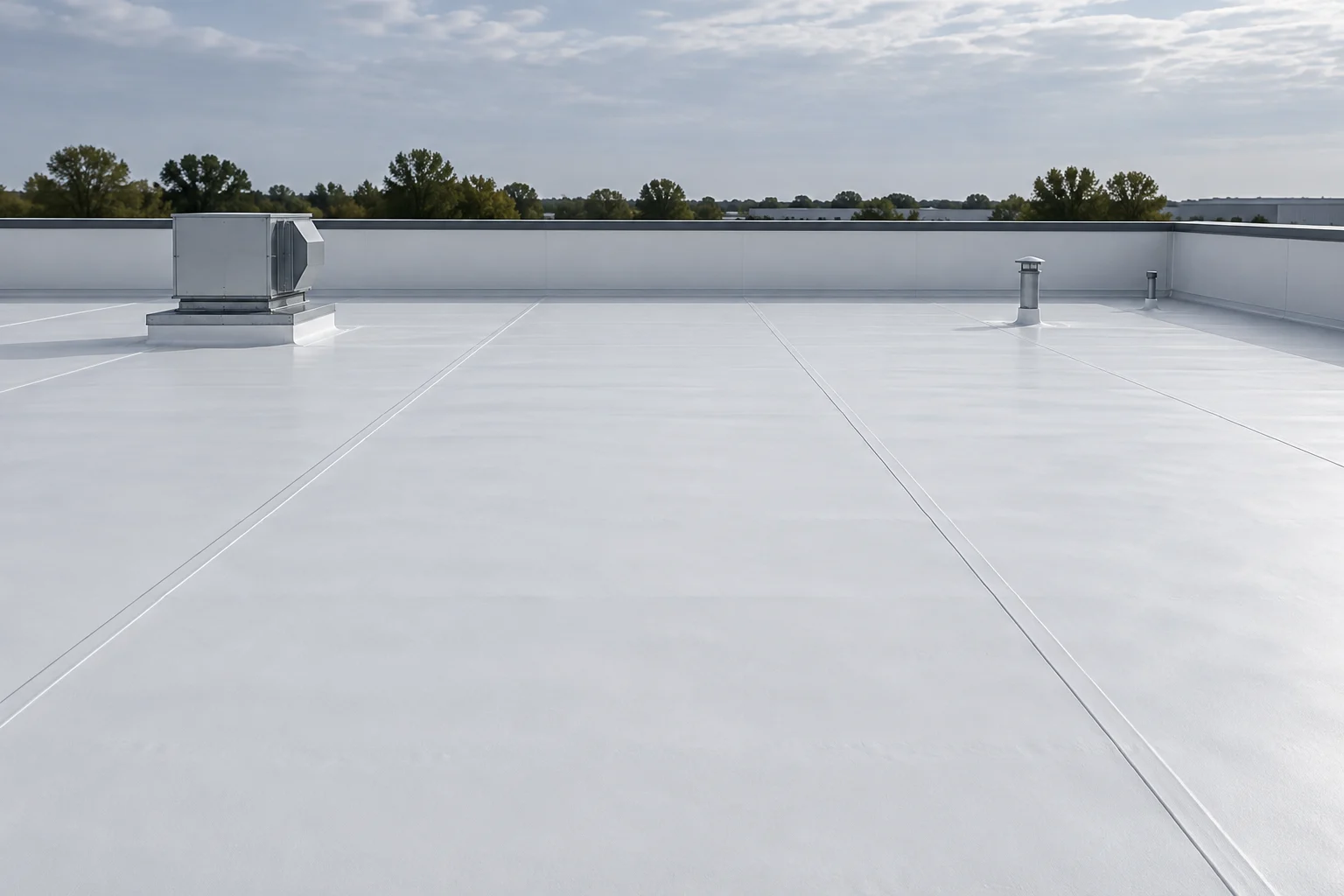
When planning a commercial flat roof replacement, two systems property owners often compare are TPO and EPDM. Both are widely used single-ply membranes, but they have different material characteristics, seam details, and installation methods. The right choice depends on the building, existing roof, project requirements, and budget.
What Is TPO Roofing?
TPO, or thermoplastic polyolefin, is a single-ply roofing membrane commonly used on commercial and industrial flat and low-slope roofs. TPO is often white, although other colors are available. Its seams are joined with hot-air welding, creating a continuous bond when installed correctly.
A TPO roof assembly may include a prepared deck, insulation, cover board when specified, membrane attachment, flashing, and carefully detailed penetrations and edges. The exact assembly should be selected for the building and project specifications.
What Is EPDM Roofing?
EPDM is a synthetic rubber roofing membrane used on flat and low-slope commercial buildings. It is commonly supplied in black, with white options also available. EPDM systems use compatible adhesives, tapes, and flashing materials to complete seams and roof details.
EPDM is valued for its flexibility and established use in commercial roofing. As with any roof system, long-term performance depends on proper substrate preparation, attachment, seam work, flashing, drainage, and ongoing maintenance.
Key Differences Between TPO and EPDM
- Seams: TPO seams are heat-welded. EPDM seams use compatible seam tapes or adhesives, depending on the system.
- Surface color: TPO is often white, while traditional EPDM is commonly black. Color can affect how the roof surface absorbs solar energy.
- Installation: Both systems require trained installation and careful attention to insulation, attachment, flashing, edges, and penetrations.
- Maintenance: Both benefit from routine inspections and prompt attention to damage, open details, drainage issues, and other concerns.
Which System Is Better for Your Building?
There is no single answer for every property. Building use, roof size, existing materials, rooftop equipment, insulation requirements, drainage, local conditions, and project specifications all matter. A roof assessment can help identify which system is appropriate and whether a replacement or another option should be considered.
It is also important to compare complete roof assemblies rather than membrane price alone. Insulation, attachment method, cover board, flashing details, edge metal, tear-off requirements, and warranty terms can all affect the scope of work.
Talk With a Commercial Roofing Contractor
Verified Roofing works with commercial and industrial property owners throughout Long Island and New York City on flat-roof installation, replacement, repairs, and restoration. We can review the existing roof and discuss practical options for your building.
Learn more about our commercial TPO roofing and commercial EPDM roofing, or contact Verified Roofing to discuss your project.